
MOCAST 2027 — IEEE International Conference on Modern Circuits and Systems Technologies, Thessaloniki
IEEE
MOCAST
International Conference on
Modern Circuits and Systems Technologies
About Dates Topics Speakers Committee Venue Registration
More
Call for Papers Conference Program Guides to Authors Sponsors Telecom Journal Submit a Paper →
16th Edition · IEEE-Sponsored Technical Programme

International Conference on Modern Circuits and Systems Technologies

Three days of peer-reviewed research, applied demonstrations, and open discussion at the boundary of circuit design, communication systems, and sensing applications.

Dates
23–25 June 2027
Location
Thessaloniki, Greece
Format
In person
Proceedings
IEEE Xplore®
--
Days
--
Hours
--
Minutes
--
Seconds
About the Conference

Where theory meets the bench.

The International Conference on Modern Circuits and Systems Technologies (MOCAST) on Electronics and Communications aims to bring together leading academic and industrial scientists and researchers to exchange and share their knowledge and experiences about all aspects of Circuits and Systems. It also provides a forum for exchanging ideas, discussing research results, and presenting practical applications in the areas of modeling, design, simulation, synthesis, and implementation of Circuits and Systems. It provides an interdisciplinary and multidisciplinary forum for researchers, engineers, and educators to present and discuss the most recent innovations, trends, and concerns, practical challenges encountered, and the solutions adopted in these fields.

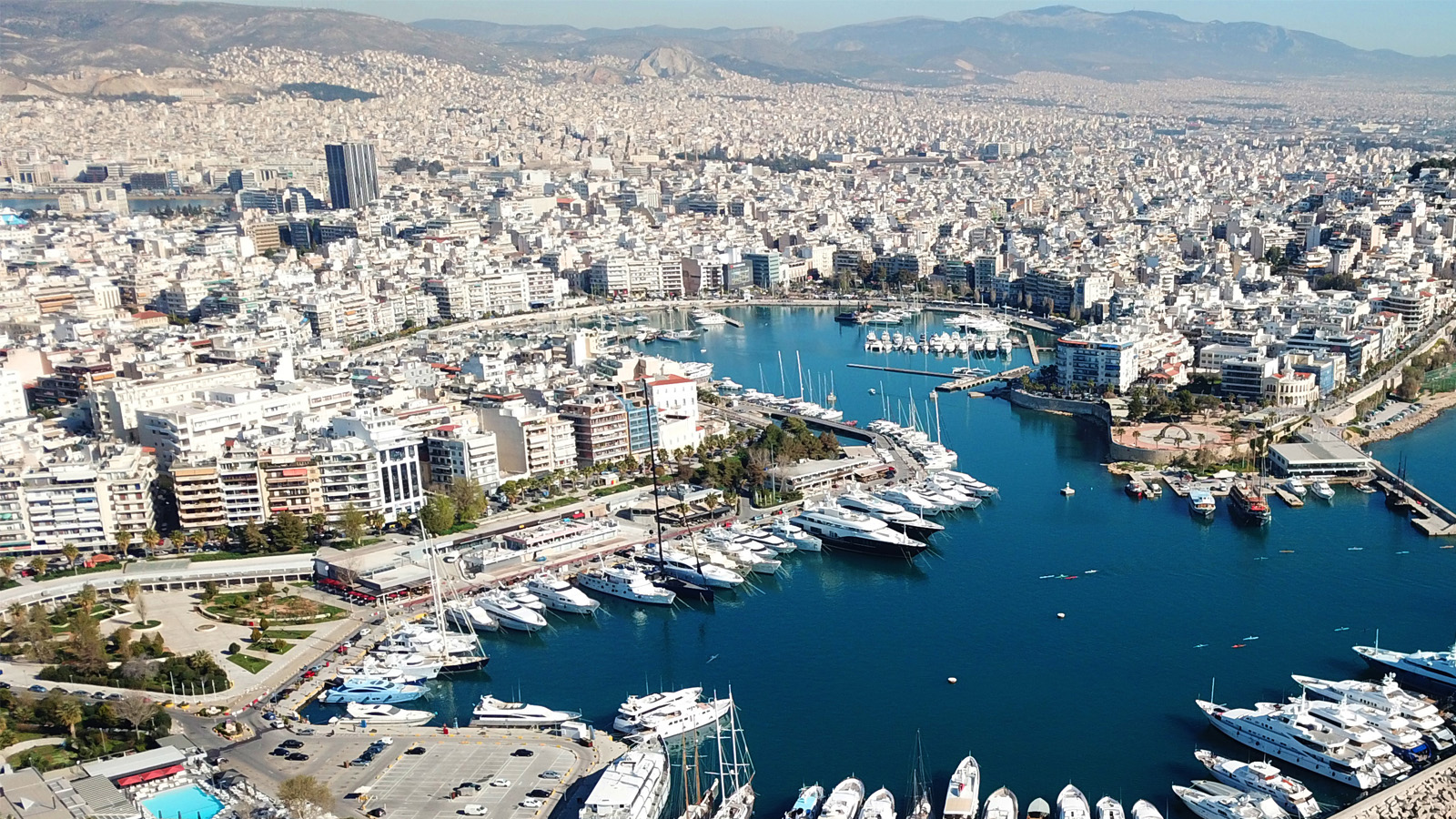
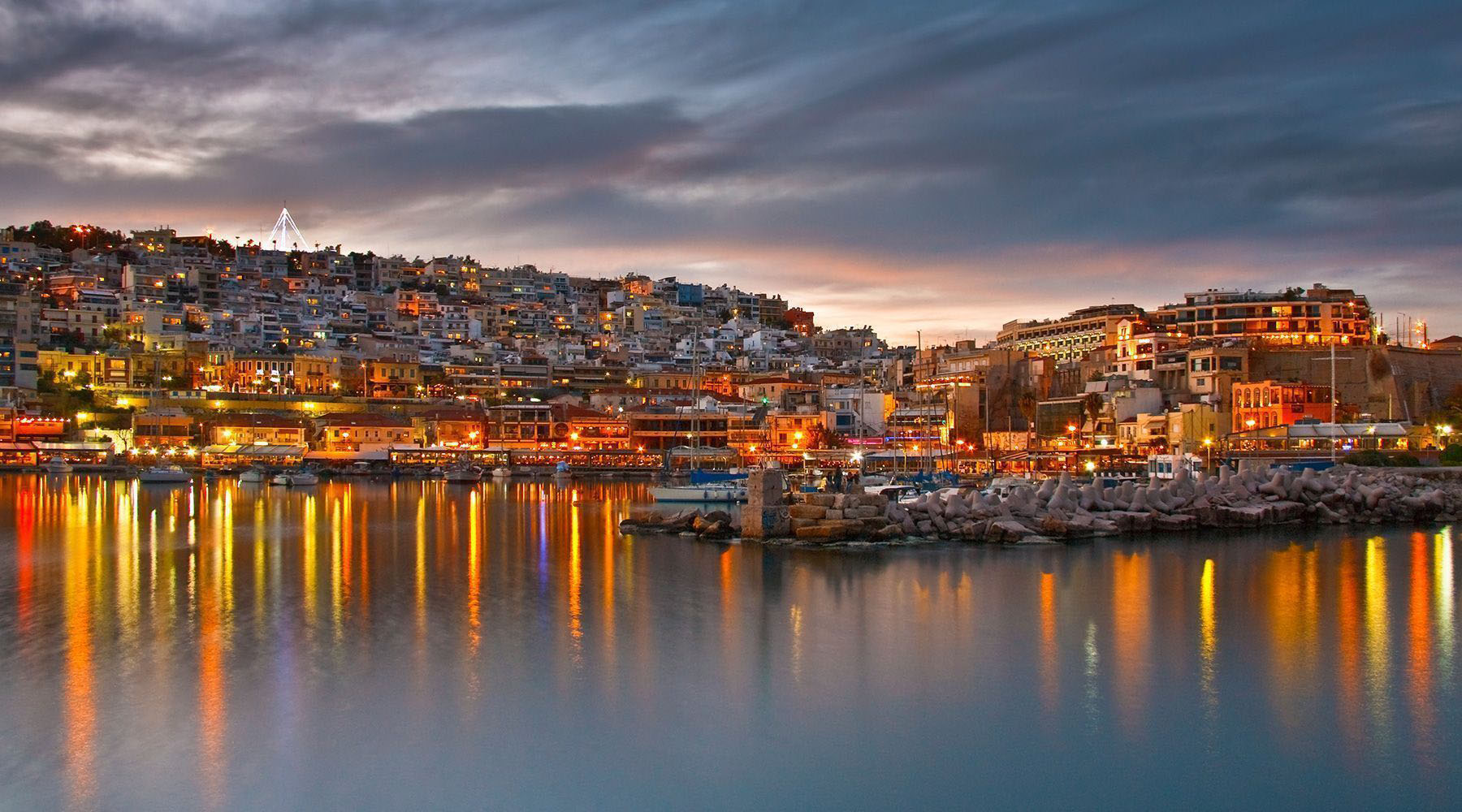
MOCAST 2027 will take place in Thessaloniki. Thessaloniki, Greece's vibrant "co-capital" and the largest metropolis in the northern region of Macedonia, is a captivating seaside city steeped in over 2,300 years of history. Founded in 315 BC by King Cassander and named after Alexander the Great's half-sister, the city serves as a living open-air museum where diverse historical eras seamlessly converge. As a crucial administrative and commercial hub during the Roman, Byzantine, and Ottoman empires, it has a multicultural legacy richly reflected in its urban landscape. Visitors can explore a remarkable collection of 15 UNESCO World Heritage Paleochristian and Byzantine monuments, marvel at the ancient Roman Arch of Galerius (Kamara), or wander through the narrow, cobblestone alleys of Ano Poli (the Upper Town), which still retains its traditional Ottoman-era charm. Watching over the sweeping Thermaic Gulf stands the iconic White Tower, the city's enduring symbol that bridges its complex past with a scenic, bustling present.

Beyond its archaeological wealth, modern Thessaloniki is celebrated as Greece's cultural and gastronomic powerhouse, infused with a youthful energy largely driven by its massive student population. Officially recognized as a UNESCO City of Gastronomy, it offers an unmatched culinary scene where centuries-old Sephardic Jewish, Ottoman, and traditional Greek flavors fuse seamlessly in the historic Ladadika district and lively open-air tavernas. The heartbeat of daily life flows along its famous waterfront promenade, where locals and travelers alike gather for evening strolls toward the grand, neoclassical Aristotelous Square. Host to globally renowned annual events like the Thessaloniki International Film Festival, the city effortlessly balances cosmopolitan sophistication with a relaxed, welcoming coastal lifestyle, cementing its status as one of Southeastern Europe's most dynamic and enchanting destinations.

Important Dates

Submission timeline

All deadlines are 23:59 AoE (Anywhere on Earth).

15 Jan 2027
Special session proposals deadline
Special Sessions
29 Jan 2027
Notification of acceptance of special sessions
Notification
12 Feb 2027
Papers submission deadline
Submission
12 Feb 2027
Papers submission deadline for special sessions
Submission
12 Apr 2027
Notification of paper acceptance
Notification
5 May 2027
Publication-ready final version due
Camera-Ready
6 May 2027
Registration deadline
Registration
23–25 Jun 2027
Conference days, Thessaloniki
Conference
Call for Papers

Technical scope

We welcome original, unpublished work across the following tracks. Cross-track submissions are encouraged.

TR·01

Analog/RF & Mixed-Signal Circuits

Op-amps, filters, and voltage/current references through to RF, mm-wave and THz building blocks such as LNAs, mixers, PLLs and data converters.

TR·02

Digital Circuits

Energy-efficient, high-performance VLSI; reconfigurable and secure digital design; memory and processor architectures; approximate and unconventional computing.

TR·03

Nonlinear Circuits & Systems

Chaos theory, bifurcation and synchronization, memristive and fractional-order circuits, and chaos-based secure communication.

TR·04

Device & Circuit Modeling

Transistor, parasitic, timing, power and noise models, plus memristor and standard-cell modeling.

TR·05

Systems & Applications

SoC and cyber-physical systems, IoT platforms and CAD tools, signal/image processing, control, robotics and bioengineering systems.

TR·06

Sensors & Sensing Systems

Sensor interfacing and instrumentation, biomedical and healthcare circuits, low-noise/EMI-immune design, wearable and autonomous sensing.

TR·07

Automotive, Medical & Flexible Electronics

Circuits and systems for automotive sensing and control, medical devices, and flexible or printed electronics.

TR·08

Emerging Technologies & Devices

Quantum and neuromorphic computing, synaptic devices, novel nano-electronics, MEMS, and GaN/SiC devices.

TR·09

AI, Machine Learning & Applications

VLSI for AI and AI for VLSI, AI accelerators, edge computing, TinyML, and AI security, resilience and ethics.

TR·10

Communication Systems

Wireless and microwave technologies, antennas and propagation, optical communications, radar, RFID, and low-power radio design.

TR·11

Network Systems

Wireless, mobile, ad hoc and vehicular networks, SDN/NFV, cloud and edge networking, and network security and privacy.

TR·12

Power Electronics & Management

Power converters, regulators and LDOs, energy harvesting, power delivery networks, and power optimization techniques.

TR·13

Imagers, MEMS, Medical & Displays

Imaging and smart-imaging chips, RF MEMS, implantable ICs, lab-on-chip systems, and display interface circuits.

TR·14

Radiation Front Ends

Nuclear and space applications: data acquisition and trigger systems, radiation/semiconductor detectors, and radiation-hardness studies.

TR·15

Education in Circuits, Systems & Communications

Pedagogy, curricula, and teaching methods for circuits, systems, and communications engineering.

Schedule

Conference programme

A detailed session-by-session schedule will be published closer to the event. Daily structure below.

Day 1 · 23 Jun
Registration, opening keynote, Tracks 01–02 parallel sessions
Plenary
Day 2 · 24 Jun
Tracks 03–05 parallel sessions, demo floor, poster session
Sessions
Day 2 · Evening
Conference dinner & social event
Social
Day 3 · 25 Jun
Track 06, special sessions and workshops, closing keynote
Closing
For Authors

Guides to authors

Please review these guidelines before submitting to ensure your paper meets formatting and review requirements.

GD·01

Manuscript template

Use the official IEEE two-column conference template. The size of the papers is 4 pages, including references. Up to 2 more pages are allowed at an additional cost.

GD·02

Plagiarism policy

All submissions are screened; papers exceeding similarity thresholds are desk-rejected.

GD·03

Camera-ready checklist

Copyright form, IEEE PDF eXpress validation, and final formatting check are required.

GD·04

Presentation format

15-minute oral slot plus 3-minute Q&A, or A0 poster for poster-track acceptances.

GD·05

Best paper awards

Nominated by track chairs; winners announced at the closing ceremony.

Keynote Speakers

This year's plenary sessions

To Be Announced

The keynote speaker lineup for MOCAST 2027 will be announced soon. Please check back for updates.

Organization

Programme committee

General Chairs
Prof. Spiros NikolaidisAUTH, Greece
Prof. Sotirios GoudosAUTH, Greece
Co-Chairs
Prof. Ronald TetzlaffTU-Dresden, Germany
Prof. Vasileios PavlidisAUTH, Greece
Venue

Thessaloniki, Greece

KEDEA — Aristotle University Research Dissemination Center building exterior KEDEA Building
KEDEA lecture hall interior, tiered auditorium seating Lecture Hall

Aristotle University Research Dissemination Center (KEDEA)

MOCAST 2027 will be hosted at KEDEA, on the Aristotle University campus, with plenary and parallel sessions held across its tiered lecture auditoria.

  • Aristotle University Campus, 3is Septemvriou, Thessaloniki, 54636, Greece
  • Tel.: +30 2310 99 4013
  • From Thessaloniki International Airport (SKG) to KEDEA: passengers are advised to take bus route 02X, followed by Metro Line 1 to Panepistimio station, which provides direct access to the Aristotle University campus.
  • On-site registration desk opens 08:00 daily
Registration

Attendance & fees

Registration deadline: 6 May 2027. Fee amounts have not yet been finalized and will be announced soon.

Student
TBA
  • Full session access
  • Proceedings (digital)
  • Poster session entry
Author / Presenter
TBA
  • Required for accepted papers
  • Full session + demo floor access
  • Proceedings (digital + print)
  • Conference dinner included
General / Industry
TBA
  • Full session access
  • Demo floor access
  • Proceedings (digital)
Support

Sponsors & partners

We would like to invite you to be part of the 16th International Conference on Circuits and Systems Technologies (MOCAST 2027), which will be held in Thessaloniki, Greece, on June 23–25, 2027.

Every sponsorship directly contributes to the success of this event. Your support helps us deliver a high-quality program, expand the reach and impact of the event, and create meaningful opportunities for attendees, participants, and the wider community. We offer the following sponsorship packages:

Publication Partner

Telecom Journal

Authors of top-rated papers in the areas of signal processing, telecommunications, and systems engineering are invited to submit extended versions to the Telecom Journal, our long-standing publication partner.

Extended manuscripts undergo an independent review cycle and, if accepted, are published in a dedicated special issue following the conference.

30%+
New content required over the conference paper
90
Days typical review turnaround
OA
Open access option available
Q2
Journal impact quartile